
- 23 January 2023|
- News
If you love your conservatory, but it’s often unusable due to extreme temperature swings, there are a few fixes worth considering. In the quest for an energy efficient conservatory, you often don’t need to rip it up and start from scratch.
In most cases, a simple conservatory roof replacement will do the job. Replacing an older polycarbonate roof with a modern tiled, glass or hybrid solution will guarantee better thermal performance, so your space is just as comfortable on a frosty February morning as it is in a humid July afternoon.
It achieves this by reducing heat transfer, maintaining your cosy indoor temperature without letting draughts and heatwaves inside. We also recommend considering a window or door upgrade, with data from the Energy Saving Trust showing that 25% of warmth in a home is lost through your glazing, so this too could help in making your conservatory both cheaper to heat and more comfortable. If budget allows, upgrading to an orangery, a more permanent-feeling structure with a brick base, offers best-in-class results.
An energy efficient conservatory brings real rewards:
- Lower energy bills and less household energy waste
- Better temperature control, so the room feels like the rest of your home
- A cut in your family’s carbon footprint
- A boost to property value, with a genuine extra living space
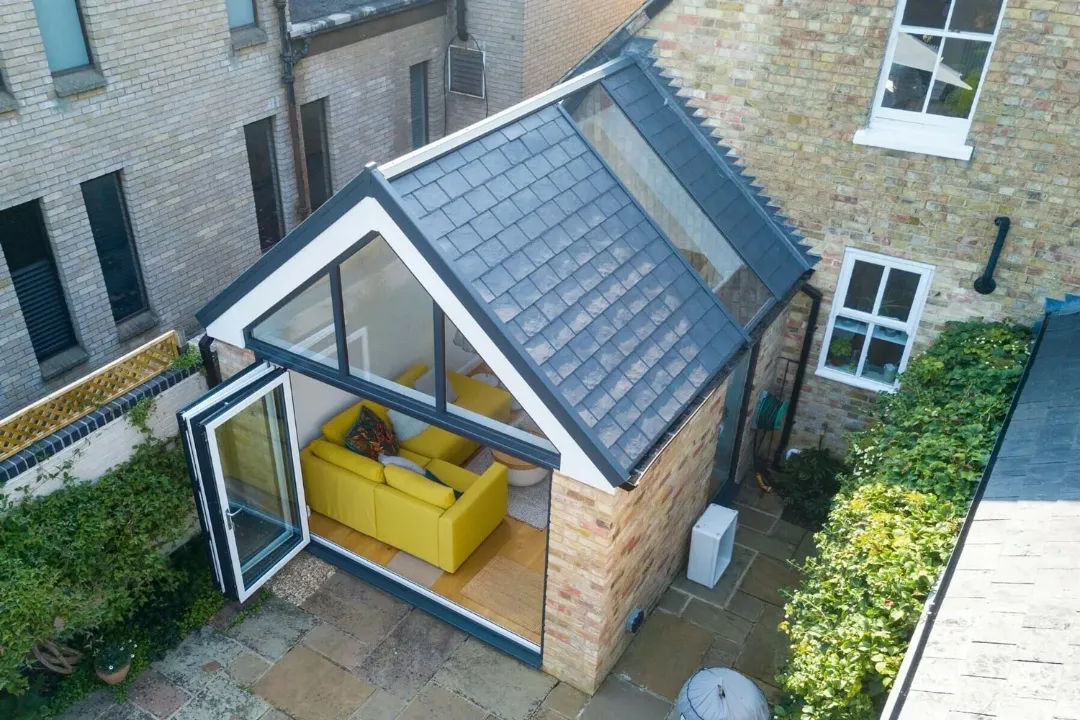
How can I make my conservatory more energy efficient?
The most effective way to make your conservatory more energy efficient is to replace the roof, as the roof is usually the weakest point in an older conservatory. Upgrading your windows and doors helps too, and if budget allows, converting to an orangery offers the very best thermal performance.
Our recommendation: replace the roof
Thermal blinds and even the most economical conservatory heater only treat the symptoms of poor insulation. With energy costs front of mind, a new roof is one of the most foolproof approaches we know. An old polycarbonate roof is often to blame for heat loss.
Which is the best replacement conservatory roof?
For thermal efficiency, a tiled or solid panel roof is hard to beat. For maximum natural light, or where only like-for-like changes are allowed, a modern glass roof is ideal.
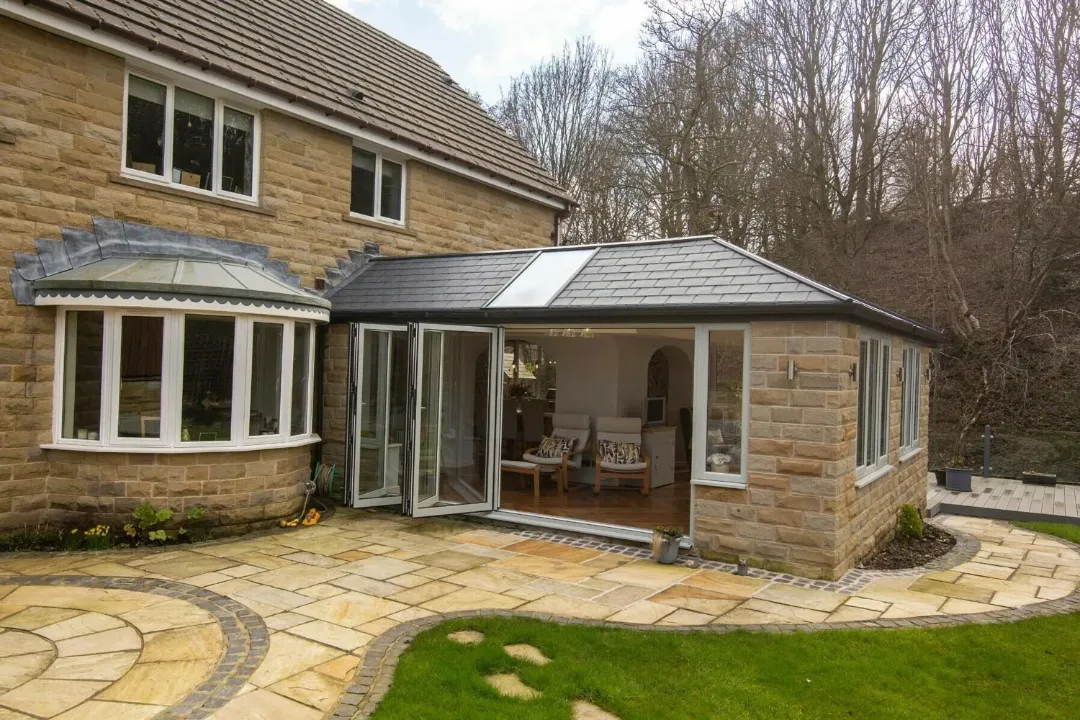
Tiled conservatory roof replacements
Our Ultraroof tiled conservatory roof gives you the permanent look of an extension. It’s a common misconception that tiles make a room dark. Glass panels can be incorporated to let plenty of light in should you wish.
Benefits of a tiled conservatory roof
- Exceptional energy efficiency, with U-values as low as 0.12 W/m²K and BBA certification
- Meets building regulations
- Spans up to 4m
- Watertight in six hours
- Tiles in three colours or Metrotile shingles in four shades
Glass conservatory roof replacements
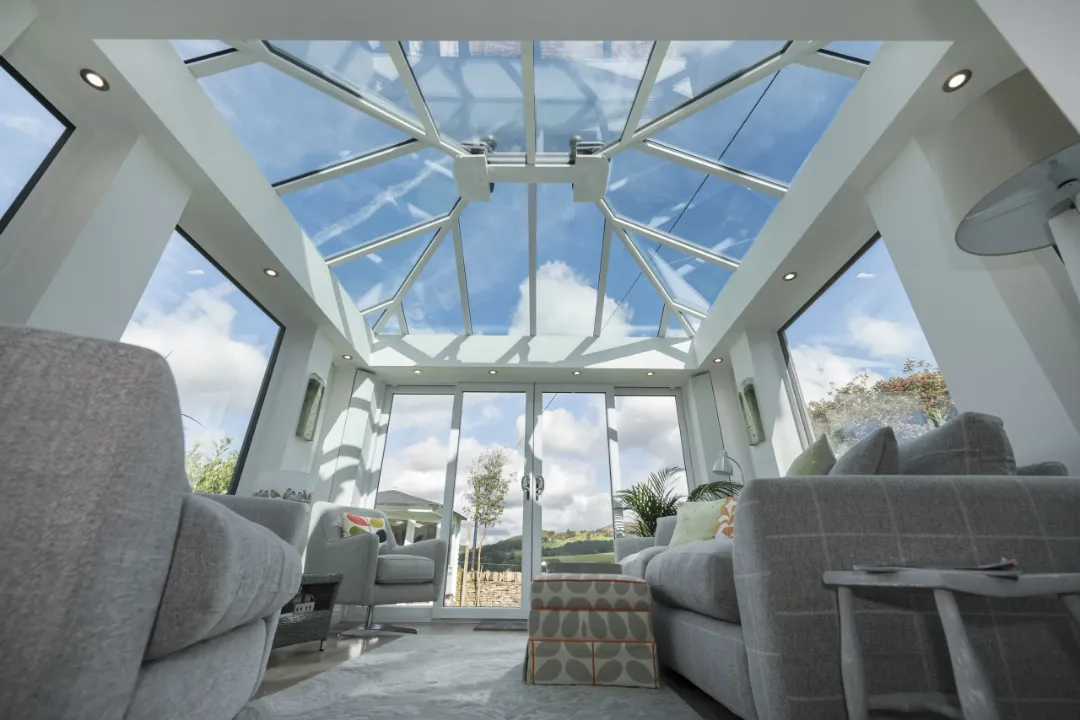
A modern glass roof suits tighter budgets. It also suits homes limited to like-for-like changes, such as listed buildings, conservation areas or Article 4 areas. We know many of you reading this will see a glass conservatory roof and instantly rule it out through fears of overheating, but bear with us as that’s no longer an issue.
Our glass roofs use solar control glass, and actually compete with tiled alternatives for energy efficiency, meaning no greenhouse effect in the summer, glare on the television, or condensation/chills in the winter.
Benefits of a glass conservatory roof
- 24mm to 35mm glazing units with a thermally broken ridge
- Solar control glass to keep your conservatory cool
- Self-cleaning glass
- More affordable than a new conservatory
Solid conservatory roof replacements
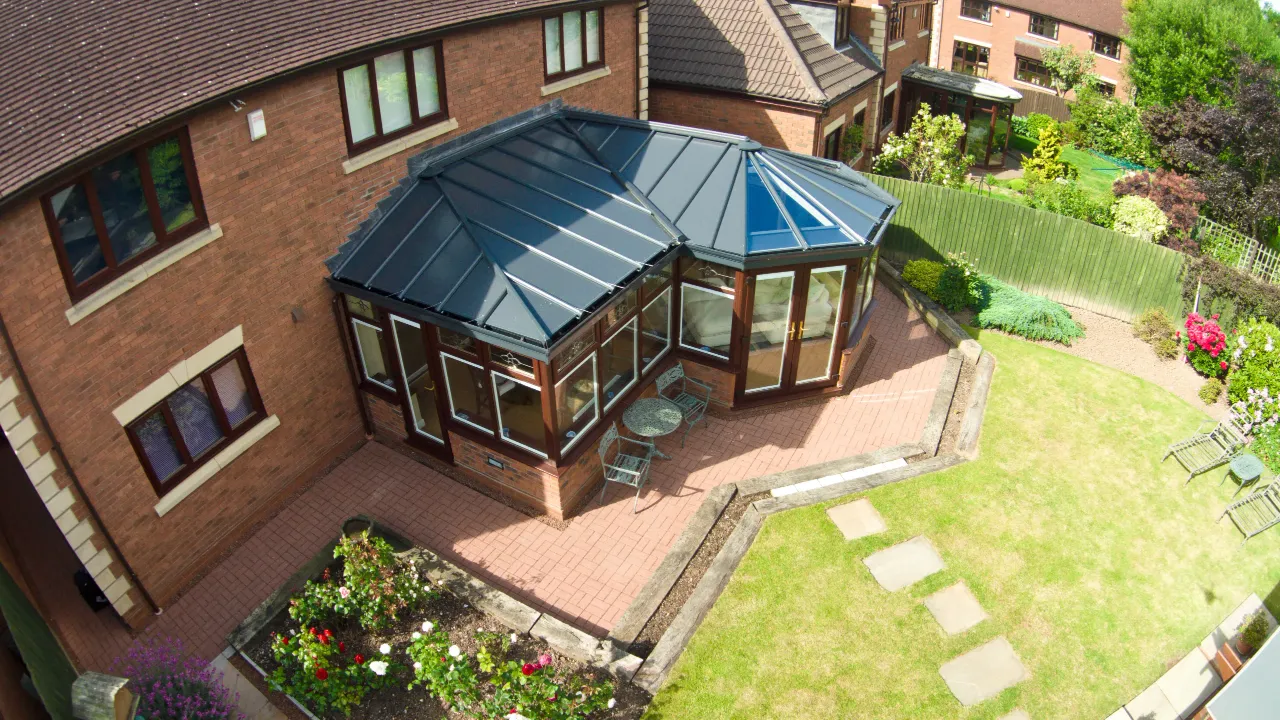
Our LivinRoof is a hybrid solid roof, with glass panels placed exactly where you want light.
Benefits of a solid conservatory roof
- U-values as low as 0.12 to 0.15 W/m²K
- Built-in spotlights, pendants and roof vents
- Fire tested as a complete assembled roof
- A choice of colours to suit all property styles
Upgrade windows and doors
Your conservatory’s windows and doors are the next place to look. According to a government buyer’s guide produced with the Energy Saving Trust, around 18% of a home’s heat loss happens through windows. The same guide says single glazing loses heat about twice as fast as standard double glazing.
Until 2022, replacement windows in England only needed a minimum energy rating of band C. That falls short of the minimum energy rating standards of today. Many homeowners ask about triple glazing, but the bigger picture is that the largest gain comes from moving to modern double glazing.
Windows
Our uPVC windows are made to measure, so no cold air sneaks in.
- Casement: The UK’s most popular window style, top or bottom hinges.
- Flush casement: Opens the same way, with the sash sitting flush in the frame
- Sliding sash: Two panels slide up and down past each other.
- Tilt and turn: Tilts in at the top for ventilation, or swings fully inwards for easy cleaning
Doors
- Composite: Made using multiple materials, incredibly popular, versatile
- uPVC front & back: A synthetic material that’s thermally efficient, low cost and easy to clean.
- uPVC French: A pair of doors opening from the centre.
- uPVC patio sliding: Panels that glide past each other on a track.
- Aluminium bifold: AluK panels that fold to one side like a concertina.
uPVC is a natural insulator, which gives an efficient uPVC door great insulating qualities. Aluminium conducts heat more readily, so modern aluminium doors use a thermal break inside the frame.
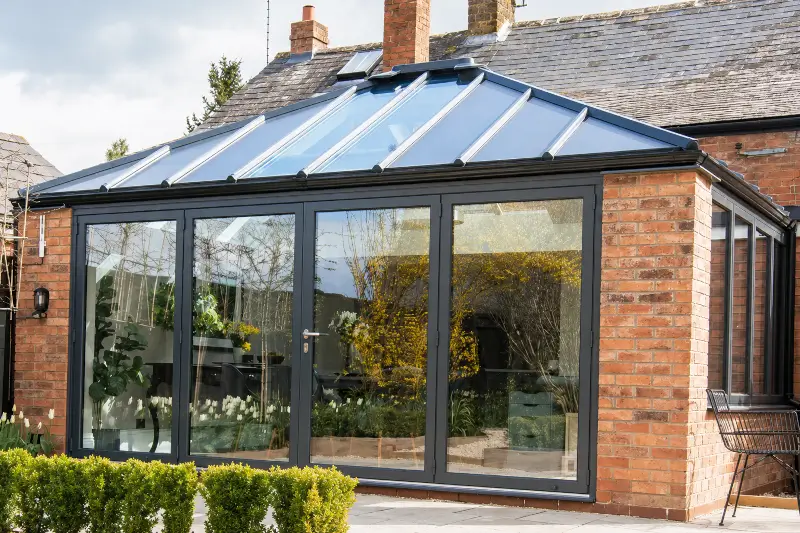
The ultimate solution: Upgrade to an orangery
Should budget allow, an orangery is the best way to create a truly comfortable room. Modern conservatories are energy efficient, but opulent orangeries are best in class.
Orangeries were first built during the Italian Renaissance to shelter citrus trees. Today’s orangery combines solid brick pillars, an insulated internal pelmet and a central roof lantern. It’s the perfect combination of immaculate glazing and solid walls, with the feel of a cosy loggia. It can also stay warm on less than the energy of a similar sized conservatory with an old polycarbonate roof.
Our Ultrasky lantern has glass U-values as low as 1.0 W/m²K, or around 1.4 W/m²K for the whole lantern. It also has around 25% fewer glazing bars than standard lanterns.
- Daylight with the privacy of solid walls
- Perfect for a dining area or a gorgeous kitchen island
- Lasting appeal that can add to the value of your home

Why trust Oakley Green Conservatories for energy efficient extensions?
We’re a family run business in Thatcham, installing bespoke conservatories, orangeries and extensions across Berkshire and the South of England.
- British-made products from suppliers including Ultraframe, Deceuninck and AluK
- A 10-year guarantee on all products and workmanship
- A 4.8-star Google average, so you can read our latest customer reviews
- A concept to completion service with our own installation teams
Browse our case studies or visit our showroom to see our products in the flesh.
Ready for an efficient conservatory you’ll love all year round? Call us on 01635 877 959 or request your free, no-obligation quote online.

Follow Oakley Green Conservatories News on Google
Stay up to date with the latest Oakley Green Conservatories news, conservatory and orangery developments, replacement roof solutions and home improvement advice by adding us to your preferred sources in Google Search.
ADD OAKLEY GREEN CONSERVATORIES TO GOOGLE PREFERRED SOURCES